Friday, November 5, 2010

New Statistical Model Moves Human Evolution Back Three Million Years

Evolutionary divergence of humans from chimpanzees likely occurred some 8 million years ago rather than the 5 million year estimate widely accepted by scientists, a new statistical model suggests.
The revised estimate of when the human species parted ways from its closest primate relatives should enable scientists to better interpret the history of human evolution, said Robert D. Martin, curator of biological anthropology at the Field Museum, and a co-author of the new study appearing in the journal Systematic Biology. 

Working with mathematicians, anthropologists and molecular biologists, Martin has long sought to integrate evolutionary information derived from genetic material in various species with the fossil record to get a more complete picture.
Comparing DNA among related animals can provide a clear picture of how their shared genes evolved over time, giving rise to new and separate species, Martin said. But such molecular information doesn't yield a timetable showing when the genetic divergence occurred.
Fossil evidence is the only direct source of information about long-extinct species and their evolution, Martin and his colleagues said, but large gaps in the fossil record can make such information difficult to interpret. For a generation, paleontologists have estimated human origins at 5 million to 6 million years ago.
But that estimate rests on a thin fossil record. By looking at all of today's primate species, all of the known fossil primates and using DNA evidence, computer models suggest a longer evolutionary timetable. The new analysis described in the Systematic Biology paper takes into account gaps in the fossil record and fills in those gaps statistically.
Such modeling techniques, which are widely used in science and commerce, take into account more overall information than earlier processes used to estimate evolutionary history using just a few individual fossil dates, Martin said. It can give scientists a broader perspective for interpreting data.
One example is a skull fossil discovered in Chad (central Africa) earlier in this decade. The fossil, named Sahelanthropus tchadensis and nicknamed Toumaï (which means "hope of life" in the local Goran language), raised great interest because it has many human characteristics. But consensus on how to classify the discovery has been elusive particularly because the fossil is about 7 million years old, well beyond the accepted time frame for human evolution.
Under the new estimate, Toumaï would fall within the period after the human lineage split from chimpanzees, Martin said.
The new approach to dating evolutionary history builds on earlier work by Martin and colleagues. In 2002, they published a paper in Nature that argues the last common ancestor of today's primates lived some 85 million years ago.
This implies that for 20 million years before dinosaurs became extinct, early versions of primates also lived and evolved. It challenged the accepted theory that primates and other mammals didn't really thrive on the planet until dinosaurs were gone.

Thursday, November 4, 2010

Fourth Flavor of Neutrino? Physics Experiment Suggests Existence of New Elementary Particle

The results of a high-profile Fermilab physics experiment appear to confirm strange 20-year-old findings that poke holes in the standard model, suggesting the existence of a new elementary particle: a fourth flavor of neutrino.

The new results go further to describe a violation of a fundamental symmetry of the universe asserting that particles of antimatter behave in the same way as their matter counterparts.
Neutrinos are neutral elementary particles born in the radioactive decay of other particles. The known "flavors" of neutrinos are the neutral counterparts of electrons and their heavier cousins, muons and taus. Regardless of a neutrino's original flavor, the particles constantly flip from one type to another in a phenomenon called "neutrino flavor oscillation."
An electron neutrino might become a muon neutrino, and then later an electron neutrino again. Scientists previously believed three flavors of neutrino exist. In this Mini Booster Neutrino Experiment, dubbed MiniBooNE, researchers detected more oscillations than would be possible if there were only three flavors.
"These results imply that there are either new particles or forces we had not previously imagined," said Byron Roe, professor emeritus in the University of Michigan's Department of Physics, and an author of a paper on the results newly published online in Physical Review Letters.
"The simplest explanation involves adding new neutrino-like particles, or sterile neutrinos, which do not have the normal weak interactions."
The three known types of neutrino interact with matter primarily through the weak nuclear force, which makes them difficult to detect. It is hypothesized that this fourth flavor would not interact through the weak force, making it even harder to find.
The existence of sterile neutrinos could help explain the composition of the universe, said William Louis, a scientist at Los Alamos National Laboratory who was a doctoral student of Roe's at U-M and is involved in the MiniBooNE experiment.
"Physicists and astronomers are looking for sterile neutrinos because they could explain some or even all of the dark matter of the universe," Louis said. "Sterile neutrinos could also possibly help explain the matter asymmetry of the universe, or why the universe is primarily composed of matter, rather than antimatter."
The MiniBooNE experiment, a collaboration among some 60 researchers at several institutions, was conducted at Fermilab to check the results of the Liquid Scintillator Neutrino Detector (LSND) experiment at Los Alamos National Laboratory, which started in 1990. The LSND was the first to detect more neutrino oscillations than the standard model predicted.
MiniBooNE's initial results several years ago, based on data from a neutrino beam (as opposed to an antineutrino beam), did not support the LSND results. The LSND experiment was conducted using an antineutrino beam, though, so that was the next step for MiniBooNE.
These new results are based on the first three years of data from an antineutrino beam, and they tell a different story than the earlier results. MiniBooNE's antineutrino beam data does support the LSND findings. And the fact that the MiniBooNE experiments produced different results for antineutrinos than for neutrinos especially astounds physicists.
"The fact that we see this effect in antineutrinos and not in neutrinos makes it even more strange," Roe said. "This result means even more serious additions to our standard model would be necessary than had been thought from the first LSND result."
The result seems to violate the "charge-parity symmetry" of the universe, which asserts that the laws of physics apply in the same ways to particles and their counterpart antiparticles. Violations of this symmetry have been seen in some rare decays, but not with neutrinos, Roe said.
While these results are statistically significant and do support the LSND findings, the researchers caution that they need results over longer periods of time, or additional experiments before physicists can rule out the predictions of the standard model.

New Retinal Implant Enables Blind People to See Shapes and Objects

Research published in Proceedings of the Royal Society B reveals that a group of researchers based in Germany have developed a retinal implant that has allowed three blind people to see shapes and objects within days of the implant being installed.

One blind person was even able to identify and find objects placed on a table in front of him, as well as walking around a room independently and approaching people, reading a clock face and differentiating seven shades of grey. The device, which has been developed by the company Retinal Implant AG together with the Institute for Ophthalmic Research at the University of Tuebingen, represents an unprecedented advance in electronic visual prostheses and could eventually revolutionise the lives of up 200,000 people worldwide who suffer from blindness as a result of retinitis pigmentosa, a degenerative eye disease.
In this disease light receptors in the eye cease to function. Writing in Proceedings of the Royal Society B, Prof. Dr. Eberhart Zrenner (founding Director of Retinal Implant AG and Director and Chairman of the University of Tuebingen Eye Hospital) states that "The results of this pilot study provide strong evidence that the visual functions of patients blinded by a hereditary retinal dystrophy can, in principle, be restored to a degree sufficient for use in daily life."
The device -- known as a subretinal implant -- sits underneath the retina, directly replacing light receptors lost in retinal degeneration. As such, it uses the eyes' natural image processing capabilities beyond the light detection stage to produce a visual perception in the patient that is stable and follows their eye movements. Other types of retinal implants -- known as epiretinal implants -- sit outside the retina and because they bypass the intact light-sensitive structures in the eyes they require the user to wear an external camera and processor unit.
The subretinal implant described in this paper achieves unprecedented clarity because it has a great deal more light receptors than other similar devices. As Prof. Dr. Zrenner states, "The present study...presents proof-of-concept that such devices can restore useful vision in blind human subjects, even though the ultimate goal of broad clinical application will take time to develop."

Wednesday, November 3, 2010

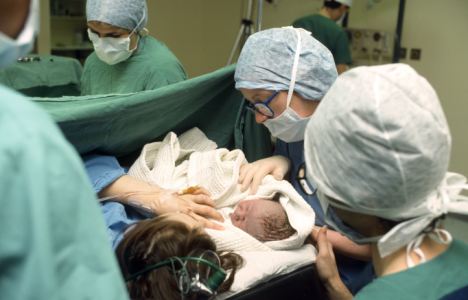
Children born by Caesarean are calmer, claims study

Children born after a Caesarean requested by the mother are calmer with fewer emotional and behavioural problems, claim researchers. 
During pre-school years they are much less likely to suffer problems such as anxiety, aggression and attention disorders, according to a Chinese study.
Those born with the help of forceps or a suction cup were 40 per cent more likely to be among the worst affected by such problems.
Previous research suggested babies born using 'assisted delivery' techniques have the highest levels of stress hormones on arrival, and this may affect early development.
The study involving 4,190 pre-school children from southeast China looked at the different modes of delivery and links with childhood behaviour. 
China has the highest rate of Caesarean section in the world with around half of babies delivered surgically, according to the World Health Organisation. 
About one in four babies in the UK are delivered by Caesarean, most of them in emergencies or at the request of doctors for medical reasons.
About seven per cent of all NHS surgical births - around 10,000 babies a year - follow a request from the mother for no medical reason.
British research last month found regional differences were not down to mothers being 'too posh to push' but variations in decisions made by doctors facing a similar set of complications.
In the latest study, two per cent of births were elective Caesarean and 85 per cent were spontaneous delivery. Just over 500 - 12 per cent - were assisted births. 
Parents were asked to complete a standard list measuring emotional and behavioural problems in the early years, says a study in BJOG: An International Journal of Obstetrics and Gynaecology. 
The link between mode of delivery and subsequent childhood emotional and behavioural problems is possibly related to high levels of the stress hormone cortisol. 
Immediately after birth, cord blood cortisol levels have been found to be lowest in babies born by elective Caesarean followed by spontaneous vaginal birth. 
The highest levels are found in assisted deliveries where forceps or a suction cup is used because labour is prolonged and complications may have developed.
Previous studies have suggested these children experienced the highest levels of stress during birth.  
Professor Jianmeng Liu, Deputy Director of the Institute of Reproductive and Child Health, Peking University Health Science Centre, Beijing, one of the authors on the paper said it was the first time research has looked at the effect of caesarean delivery on maternal request on childhood behaviour, known as psychopathology. 
He said 'Cortisol levels have been linked to childhood psychopathology, however, more studies are still needed to look at this in more detail.'
Professor Philip Steer, BJOG editor-in-chief said 'With the rising rates of elective caesarean section in China and in other countries, it is interesting to see from this research that there is a low impact on childhood psychopathology. 
'Assisted vaginal delivery can be more traumatic for both the mother and child hence the rise in cortisol levels. 
'More research is needed however to look at the specific link between assisted delivery such as forceps and psychopathology in children.'

Autism brain secrets revealed by scan


Differences in the brain structure of people carrying an "autism gene" may offer clues to how the condition develops, say US scientists.
Scans revealed children carrying the gene variant appeared to have more nerve cell "connections" within the frontal lobe.
They had fewer connections between this and the rest of the brain, reported Science Translational Medicine journal.
Brain research has just begun to reveal autism's roots, a UK expert said.
One-third of the population carry the CNTNAP2 gene variant, so it does not guarantee that autism will develop, but just slightly increases the risk.
Different pathways
However, scientists at the University of California in Los Angeles believe it may influence the way the brain is "wired".
They used functional magnetic resonance imaging (fMRI) to look for communication between different brain regions, and to measure the strength of these connections.
They scanned the brains of 32 children as they performed learning-related tasks - half had autism, and half did not.
Regardless of their diagnosis, those carrying the CNTNAP2 variant had differences in the connections within the frontal lobe of the brain itself and between the frontal lobe and the rest of the brain.
Dr Ashley Scott-Van Zeeland, who led the research, said: "The front of the brain appears to talk mostly to itself - it doesn't communicate as much with other parts of the brain and lacks long-range connections to the back of the brain."

The researchers also spotted differences in the "wiring" between the frontal lobe and the left and right sides of the brain.
In children with the version of the gene not linked to autism risk, the pathways were linked more strongly to the left side of the brain.
In those with the "risk variant", the pathways were different, linking the lobe strongly to both sides of the brain.
This, said the researchers, could explain why the gene variant had been linked to children who are slow in starting to talk.
Dr Scott-Van Zeeland said that if the gene variant did predict language problems, then it might be possible to design therapies which helped to "rebalance" the brain and encourage normal development.
Professor Margaret Esiri, a neuroscientist from Oxford University, said that researchers had so far "barely scratched the surface" of understanding the interplay between genes and brain development.
Her own research closely analyses a scarce supply of donated brains from both autistic and non-autistic adults and children to look for differences in structure and function.
She said: "If you understand these subtle differences, there may be ways of 'tweaking' them earlier in life, and bringing them back into a normal trajectory of development. Of course, this would be many years away."
Carol Povey, from the National Autistic Society, said the study was interesting because it began to link genes thought to be involved in autism to actual changes in brain function.
She said: "The causes of autism are as yet unknown, but we do know there are likely to be many factors involved, so we hope this will contribute to our understanding of this complex condition."

Friday, October 29, 2010

Researchers Build Colony of Colon Cancer Stem Cells to Test New Approach to Therapy

University of Pittsburgh researchers have devised a three-dimensional system in laboratory culture that mimics the growth patterns of colon cancer stem cells in patients. Their findings were presented at the American Association for Cancer Research special conference on Colorectal Cancer: Biology to Therapy, held Oct. 27-30, 2010.
The assay, which uses green fluorescent "reporter" proteins to watch the process of stem cell differentiation, is designed to understand how these cancer stem cells behave, and to identify and test therapies that could halt production of the endless generations of new cancer stem cells that continually revive a tumor.

"Colon cancer stem cells are thought to be the root of therapy resistance, metastases and recurrence in colon cancer, so our approach is to find a way to remove the ability of these stem cells to self-renew," said the study's lead investigator, Julie Chandler, a graduate student in pathology.
"While many labs have investigated notch inhibitors and others have investigated cancer stem cells, our unique approach combines both in a three-dimensional culture that mimics what happens in patients," she said. Animal models, which are immunodeficient and use human xenografs, may not provide accurate information about colon cancer stem cell behavior, Chandler added.
Colon cancer stem cells have the ability to repopulate a tumor after treatment, using stem cells that are resistant to treatment. Such treatment forces a response in these cells, which are genetically unstable, forcing the cells to adapt and pass on resistance to daughter stem cells.
In the same way that adult intestinal stem cells self-renew, colon stem cells give rise to different kinds of cells, including daughter stem cells and fully differentiated cells, such as the goblet epithelial cells that line the colon. Researchers would like to force cancer stem cells to differentiate and behave like goblet cells because these cells do not self renew. Chandler said the notch pathway that controls differentiation in stem cells is inactivated in goblet cells. One way to possibly do that is to use agents that shut down the notch pathway, such as gamma secretase inhibitors, she said. Cancer treatment may then be able to destroy tumors that are now populated by fully differentiated goblet cells.
In their new assay, Chandler used a three-dimensional culture matrix in which she could watch a single cancer stem cell divide and produce progeny, which is called an "independent organoid."
To see the kind of cells a colon cancer stem cell produces, they labeled a protein that is specific only to goblet cells. To date, the researchers have found that some colon cancer stem cells produce many differentiated cells, such as goblets and others, while others produce more primitive, self-renewing cells.
In this way, the researchers can test the ability of notch pathway inhibitors to force progeny cancer stem cells to differentiate into harmless goblet cells.
"Green goblet cells are no longer capable of promoting cancer growth," Chandler said. "It may be that a certain notch inhibitor or similar drug is all that is needed to prevent cancer recurrence and metastasis that so often follows an initial response to treatment. This new tool will help us determine if that is so."

Is the Shape of a Genome as Important as Its Content?

 If there is one thing that recent advances in genomics have revealed, it is that our genes are interrelated, "chattering" to each other across separate chromosomes and vast stretches of DNA. According to researchers at The Wistar Institute, many of these complex associations may be explained in part by the three-dimensional structure of the entire genome.


A given cell's DNA spends most of its active lifetime in a tangled clump of chromosomes, which positions groups of related genes near to each other and exposes them to the cell's gene-controlling machinery. This structure, the researchers say, is not merely the shape of the genome, but also a key to how it works.
Their study, published online as a featured article in the journal Nucleic Acids Research, is the first to combine microscopy with advanced genomic sequencing techniques, enabling researchers to literally see gene interactions. It is also the first to determine the three-dimensional structure of the fission yeast genome, S. pombe. Applying this technique to the human genome may provide both scientists and physicians a whole new framework from which to better understand genes and disease, the researchers say.
"People are familiar with the X-shapes our chromosomes form during cell division, but what they may not realize is that DNA only spends a relatively small amount of time in that conformation," said Ken-ichi Noma, Ph.D., an assistant professor in Wistar's Gene Expression and Regulation program and senior author of the study. "Chromosomes spend the majority of their time clumped together in these large, non-random structures, and I believe these shapes reflect various nuclear processes such as transcription."
To map both individual genes and the overall structure of the genome, Noma and his colleagues combined next generation DNA sequencing with a technique called chromosome conformation capture (3C). They then used fluorescent probes to pinpoint the exact location of specific genes through a microscope. With these data, the researchers were able to create detailed three-dimensional computer models of the yeast genome.
Using this novel approach, the researchers can view genes as they interact with each other. Noma and his colleagues can view where highly active genes are located, or see if genes that are turned on and off together also reside near each other in the three-dimensional structure of the genome. In total, the Wistar researchers also studied 465 so-called gene ontology groups -- groups of genes that share a related purpose in the cell, such as structure or metabolism.
"When the chromosomes come together, they fold into positions that bring genes from different chromosomes near each other," Noma said. "This positioning allows the processes that dictate how and when genes are read to operate efficiently on multiple genes at once."
This structure is not merely an accident of chemical attractions within and among the chromosomes -- although that is certainly a part of the larger whole -- but an arrangement guided by other molecules in the cell to create a mega-structure that dictates genetic function, Noma says. He envisions a scenario where accessory molecules, such as gene-promoting transcription factors, bind to DNA and contribute to the ultimate structure of the genome as the chromosomes fold together.
"I believe we are looking at a new way to visualize both the genome itself and the movements of all the various molecules that act on the genome," Noma said.
According to the Wistar scientists, their techniques are scalable to the human genome, even though fission yeast only has three chromosomes. In fact, the researchers found signs of "transcription factories" -- clusters of related genes that are read, or "transcribed," at discrete sites -- which have been proposed to exist in mammals.